
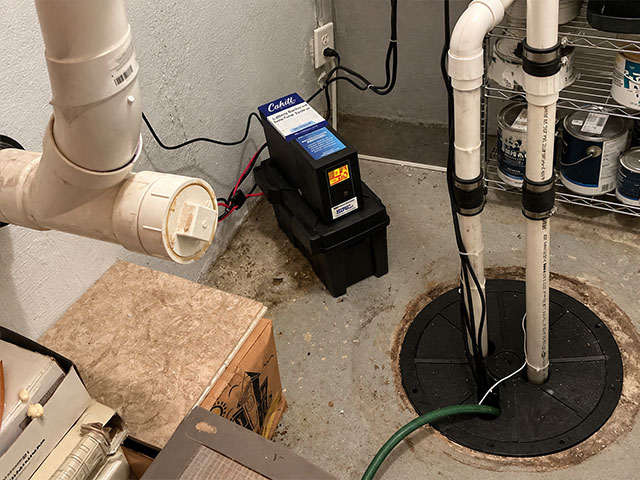
Your sump pump is one of the most important pieces of equipment protecting your basement from water damage. Whether it is heavy spring rainfall, summer thunderstorms, or the intense Fall rains that can overwhelm drainage systems, your sump pump works hard to keep groundwater from entering your home.
But what happens when the power goes out during a storm?
Without a battery backup sump pump system, your primary sump pump may stop working precisely when you need it most. A properly installed battery backup system provides an additional layer of protection, helping keep your basement dry when your primary pump cannot operate.
At Cahill Plumbing & Sewer, we help homeowners throughout the North Shore and Chicago’s northern suburbs protect their homes with dependable sump pump and backup systems.
A primary sump pump relies on electricity to remove water from your sump pit. During a severe storm, power outages and heavy groundwater infiltration can create the perfect conditions for basement flooding.
A battery backup sump pump is designed to provide an additional pumping solution when your primary system is unavailable or unable to keep up.
Here are some of the most important reasons to consider installing one.
Power outages frequently occur during severe thunderstorms and heavy rain events. Unfortunately, these are often the same conditions that cause groundwater levels to rise around your foundation.
If your primary sump pump loses power, water can begin accumulating in the sump pit and eventually enter your basement.
A battery backup system can automatically activate when the primary pump loses power, helping remove water even when your home’s electrical service is interrupted.
Key benefits include:
Power loss isn’t the only reason a sump pump can stop working. Primary pumps can experience mechanical failure, electrical problems, clogged discharge lines, or other issues.
A backup system provides another pumping option if the primary pump stops operating.
Depending on the system, the backup pump may activate automatically when the water level rises or when the primary pump cannot maintain the proper water level.
A backup pump doesn’t replace the need for a properly maintained primary pump, but it can provide valuable protection when something goes wrong.
Basement flooding can cause much more than a wet floor. Standing water can damage flooring, drywall, furniture, stored belongings, and finished basement areas.
Excess moisture can also contribute to mold growth and unpleasant odors if it is not addressed promptly.
Installing a battery backup sump pump can help reduce the risk of water damage by providing additional pumping capacity when it is needed.
Potentially protected areas and belongings include:
The cost of a backup system is often far less than the potential expense and disruption associated with a flooded basement.
During significant rain events, groundwater can enter your sump pit faster than your primary pump can remove it.
Even when the power is on, a primary pump may struggle to keep up with unusually high water inflow.
A properly selected backup sump pump can provide additional pumping capacity when water levels rise.
Depending on the system, the backup pump may:
Proper pump sizing and discharge-line design are essential. A backup pump should be selected based on your home’s drainage conditions and expected water volume.
Basement flooding doesn’t always happen when you’re awake or at home. A storm can occur while you’re at work, traveling, or away for the weekend.
Many battery backup sump pump systems are designed to activate automatically when needed, reducing the risk of relying on someone to manually start a pump during an emergency.
Some systems also include alarms or monitoring features that can alert you to:
These alerts can give you valuable time to address a problem before it becomes a major flooding event.
Homeowners throughout the North Shore and Chicago’s northern suburbs know that heavy rain can arrive quickly and put significant stress on residential drainage systems.
A properly functioning sump pump is essential for many homes with below-grade basements. However, a primary pump alone may not provide enough protection during a major storm or power outage.
A battery backup system can help prepare your home for:
Fall is an excellent time to evaluate your sump pump system before seasonal storms and heavier rainfall create problems.
A typical battery backup sump pump system includes a secondary pump, a battery, a charging system, and controls that activate the pump when needed.
Here’s how it generally works:
The exact operation depends on the type of backup system installed. Some systems are designed primarily for power outages, while others can also provide assistance when the primary pump fails or water levels rise.
Not all backup systems are the same. Choosing the right equipment for your home is important for reliable performance.
When evaluating a backup sump pump, consider:
A professional inspection can help determine whether your existing sump pit, discharge piping, and electrical system are suitable for a backup pump.
How Often Should You Maintain Your Sump Pump and Battery Backup?
A backup system is only useful if it is ready to operate when you need it. Regular maintenance helps identify problems before a major storm arrives. Recommended maintenance steps:
Don’t wait until your basement is filling with water to discover that your backup battery is dead or your pump isn’t working.
For many homeowners, a battery backup sump pump is a worthwhile investment in protecting their property.
The potential cost of basement flooding can include:
A backup sump pump system can help reduce these risks by providing another line of defense when your primary pump cannot keep up.
While no sump pump system can guarantee that a basement will never flood, a properly installed and maintained battery backup system can significantly improve your home’s ability to handle power outages and sump pump emergencies.
Your sump pump is your first line of defense against groundwater entering your basement. A battery backup sump pump adds an important second layer of protection, helping safeguard your home when the primary pump loses power, fails, or struggles with increased water flow.
Don’t wait for the next major storm to find out whether your sump pump system is ready.
Cahill Plumbing & Sewer can help inspect your existing sump pump, evaluate your basement drainage needs, and recommend a battery backup system designed to provide additional protection for your home.
Contact Cahill Plumbing & Sewer today to schedule a sump pump inspection or discuss installing a battery backup system.
Protect your basement. Prepare for the unexpected. Call Cahill Plumbing & Sewer.
Same-Day & 24/7 Emergency Service
When plumbing problems can’t wait, we’re ready—day or night.
Locally Owned & Operated
Your trusted neighborhood plumbers who care about our customers.
Licensed & Experienced Plumbers
Skilled professionals who get the job done right the first time.
Upfront Pricing — No Surprises
Clear, honest pricing explained
before any work begins.
Factory-Trained Technicians
Ongoing training ensures safe, accurate, and efficient service.
100% Satisfaction Guarantee
We stand behind our work—your satisfaction comes first.

28835 N. Herky Dr, STE 120
Lake Bluff, IL 60044
(847) 450-0093
We're available 24/7, 365 to help with your plumbing, sewer, and drain service needs.
Cahill proudly serves the following communities: Antioch, Arlington Heights, Barrington, Buffalo Grove, Carol Stream, Crystal Lake, Deerfield, Des Plaines, Elk Grove Village, Evanston, Fort Sheridan, Fox Lake, Fox River Grove, Glencoe, Glenview, Grayslake, Great Lakes, Gurnee, Highland Park, Highwood, Hoffman Estates, Kenilworth, Lake Bluff, Lake Forest, Lake Villa, Lake Zurich, Libertyville, Lincolnshire, Morton Grove, Mount Prospect, Mundelein, North Chicago, Northbrook, Palatine, Park Ridge, Prospect Heights, Rolling Meadows, Schaumburg, Skokie, Vernon Hills, Wadsworth, Wauconda, Waukegan, Wheeling, Wilmette, Winnetka, Winthrop Harbor, Zion
Copyright ©2025 Cahill Plumbing, Sewer & Drain. All Rights Reserved